
Eye tracking tells you where attention goes. On its own it cannot tell you how hard someone is working, how they feel, or whether they are stressed. Tobii’s article sets out how physiological signals fill that gap.
The signals
- Brain activity (EEG) for engagement and workload.
- Heart rate (ECG or PPG) and skin conductance (GSR) for arousal and stress.
- Pupil dilation for mental effort.
Tobii cites a 2024 Drexel University study that used six measures, including EEG, eye tracking and heart rate, to assess working memory, vigilance and situational awareness.
The Tobii set-up
- Tobii Pro Spectrum: high-precision screen-based tracking that synchronises with EEG, motion capture and other sensors.
- Tobii Pro Lab: one place to record, synchronise and analyse gaze with biometric streams.
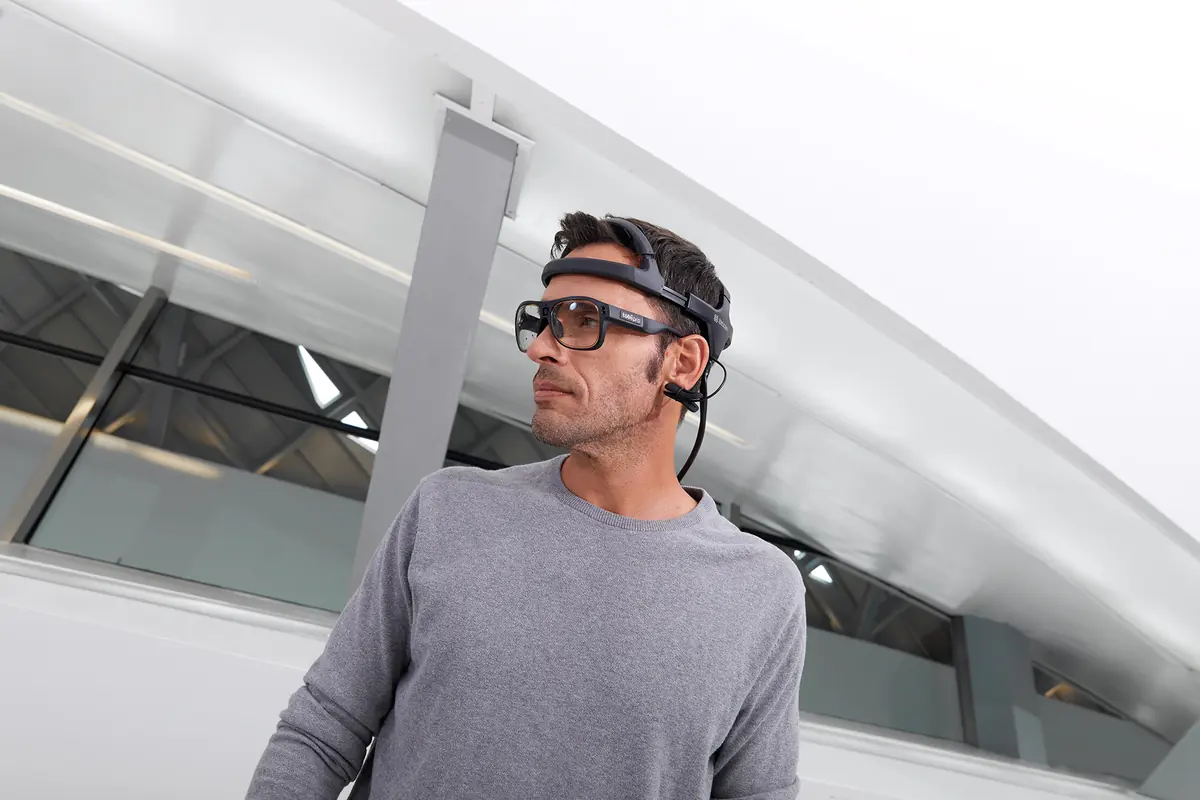
- Tobii Pro Glasses 3: the same approach in real-world settings.
Tobii works with partners including Bitbrain, Brain Products and MindWare so gaze can be recorded alongside EEG, ECG, EMG and GSR.
Where it is used
UX frustration and engagement, surgeons’ cognitive load, students’ attention, advertising impact, and driver fatigue and distraction. Tobii expects sensor fusion and AI analytics to make this multimodal approach easier to adopt.
From Consort XPR: This is exactly how we build labs: Tobii first, then the biometrics your question needs, synchronised in one place. See our Technology page for the options side by side.
Adapted from Beyond the blink: Using eye tracking + biometrics, published by Tobii (September 2026). Content and images used with permission.